
Loading...
Serving Dublin, CA and surrounding areas. (925) 536-0012
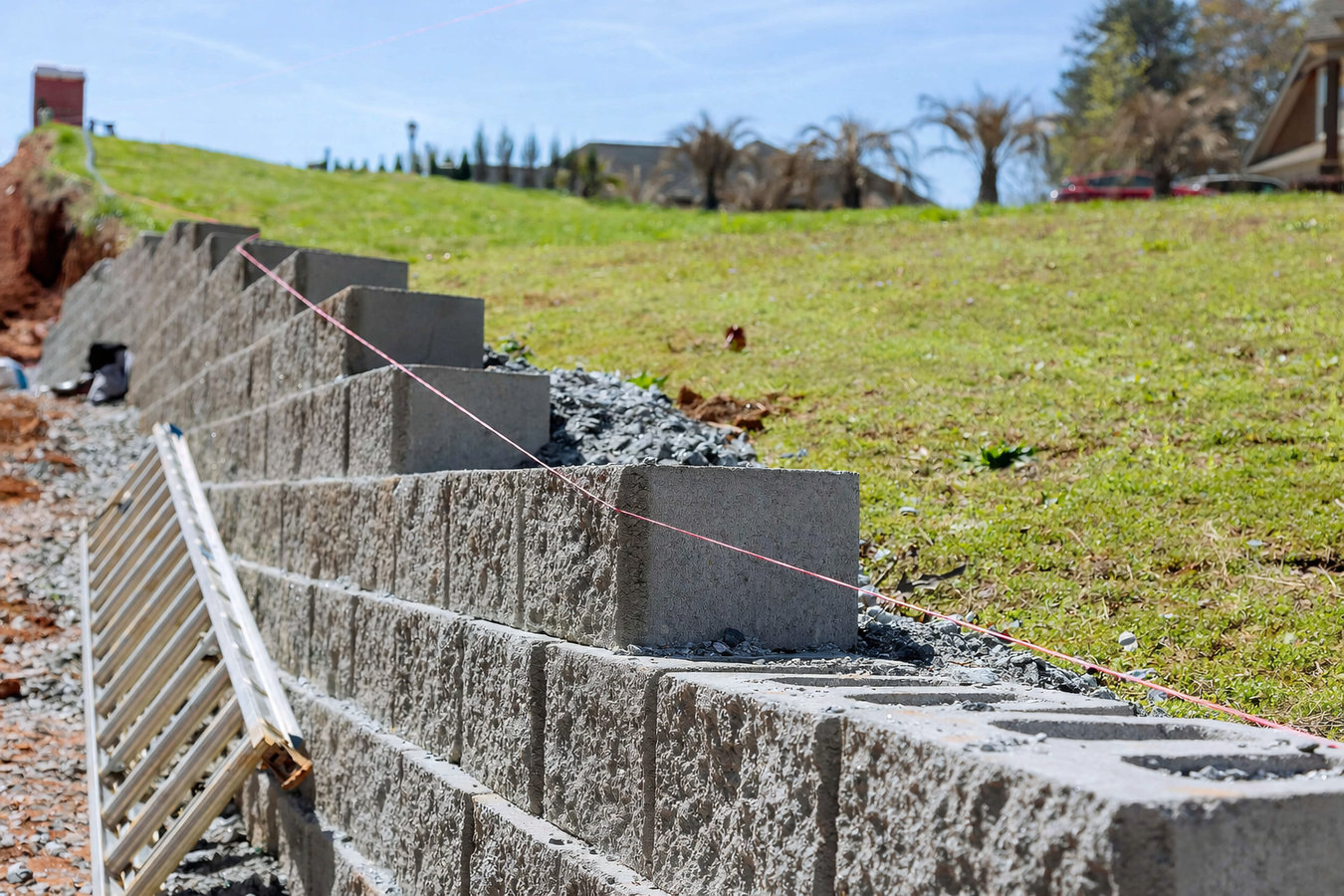
Dublin hillside lots lose soil every wet season. A properly drained retaining wall holds your yard in place - and can turn an unusable slope into flat, functional outdoor space.
Retaining wall construction in Dublin, CA involves building a permanent structure that holds back soil on a sloped or uneven lot, and a straightforward residential wall of 20 to 40 linear feet typically takes two to five days of active construction. The wall is only as good as what you cannot see - a properly compacted base, a footing set deep enough to resist Dublin clay soil movement, and a drainage system behind the wall that prevents water pressure from building up and pushing the structure over. A wall built without those elements may look fine the first summer, but it will not hold through a few wet-dry cycles.
Many Dublin homeowners come to us after watching soil slide toward their patio or fence line during winter rains. Others have an existing wall that is starting to tilt or crack because it was not built with adequate drainage or depth for local clay conditions. Either way, the solution is the same: a wall built to the right spec for this specific soil and this specific slope.
For homeowners who also need to address an aging or crumbling wall surface, we offer masonry restoration as a companion service - repointing mortar joints and repairing surface damage before a minor issue becomes a structural one.
If you notice soil creeping toward your patio, driveway, or lawn after winter rain, the slope is not stable. Dublin's wet winters accelerate this kind of erosion on graded lots where topsoil is thin. Left alone, a small slide becomes a much bigger and more expensive problem.
A wall tilting away from the hillside, or one where you can see cracks running through the blocks or mortar, is under stress it was not designed to handle. Dublin's expansive clay soils push against walls that were not built with enough drainage or depth. A leaning wall will not correct itself - it will continue to move until it fails.
Standing water collecting at the bottom of a hill or along a fence line after rain means the slope is not draining properly. This pooling puts pressure on the soil and can undermine any structure nearby - including your foundation if the slope is close to the house.
Many Dublin homeowners have a hillside backyard they have never been able to use - too steep for a patio, too unstable for a garden. The only way to create a flat area safely on a slope is to cut into the hill and hold the soil back with a properly engineered retaining wall.
The right wall material depends on your yard's slope, your soil type, and what fits your home's style. Concrete segmental blocks are the most common choice in Dublin - they are durable, cost-effective, and available in finishes that satisfy most HOA design guidelines. Natural stone walls carry a higher material cost but suit properties where the look of fieldstone or granite matters. For projects where the wall must also serve a structural or boundary function, poured concrete or a block construction similar to our concrete block wall service may be the right approach.
Every wall we build includes gravel backfill and a perforated drain pipe behind it - the drainage system that prevents water pressure from building up over time. We also handle masonry restoration for homeowners who need to repair an existing structure rather than replace it entirely. No matter the material, the base prep and drainage are what determine whether the wall is still straight in 20 years.
The most practical option for most Dublin yards - strong, HOA-compatible in most communities, and built to handle the Tri-Valley wet-dry cycle.
Suited for higher-end properties where fieldstone, granite, or limestone fits the landscape and the extra material cost is worthwhile.
Ideal for steep slopes where a single tall wall would require full engineering review - a series of shorter walls steps the grade down in stages.
For existing walls that are leaning, cracking, or showing drainage failure - rebuilt from the footing up with the drainage system that was missing the first time.
Dublin sits at the base of the Tri-Valley foothills, and many neighborhoods - especially those built on the slopes near Fallon Road, Tassajara Road, and the newer East Dublin developments - have steeply graded lots where soil movement is a real concern. The clay-heavy soil throughout the Tri-Valley swells during winter rains and shrinks in the dry summer heat, putting constant seasonal pressure on any structure holding back a slope. A wall built to minimum standards in this soil will start to show problems within a few years. A wall built with a deep footing and full drainage will hold for decades.
The City of Dublin requires a building permit for retaining walls four feet or taller, and many of Dublin's HOA-governed communities have their own design guidelines on top of that. We navigate both processes regularly. We serve homeowners across the Tri-Valley, including San Ramon and Danville, where hillside lots and clay soil conditions closely mirror what we work with here in Dublin.
We schedule an in-person visit to walk your property, look at the slope, check soil and drainage, and understand what is above and below the wall location. You receive a written estimate that covers materials, labor, permit fees, and cleanup - with no line items that appear only on the final invoice.
If your wall will be four feet or taller, we submit the permit application to Dublin's Building and Safety Division on your behalf. If you are in an HOA community, we help you prepare the submission for architectural review. Plan for one to three extra weeks for city approval. We respond within 1 business day on all questions during this phase.
The crew excavates, marks utility lines, and compacts a gravel base at the bottom of the trench. California law requires contractors to call 811 before digging - we handle this as a standard step. The base is the most important part of the job, and we do not rush it.
The wall goes up in layers with gravel and drainage pipe packed behind each course. Once complete, we backfill disturbed soil, clean the site, and schedule the city inspection if a permit was required. We walk the finished wall with you and explain the one maintenance task: clearing the drainage outlet each fall.
Free on-site visit, written quote, no pressure. We reply within 1 business day.
(925) 536-0012Water pressure behind the wall is the number one reason retaining walls fail. We include gravel backfill and a perforated drain pipe on every project - not as an upgrade, but as a standard part of how we build. A wall without drainage is not built to last in Dublin clay.
We submit permit applications to Dublin's Building and Safety Division, track approval status, and coordinate the city inspection at the end of the job. You should not have to follow up on paperwork - that is our job, not yours.
We set footings deeper than the minimum because Dublin clay soil demands it. Contractors who build to minimum spec in this area are building for failure within the first decade. We will tell you exactly what depth we are using and why before any contract is signed.
Dublin's planned communities have specific rules about wall height, materials, and finish. We know what is typically accepted in the major HOA communities here and help you choose a wall design that clears architectural review without costly revisions.
The National Concrete Masonry Association publishes guidance on retaining wall construction standards - the same standards around drainage, base depth, and batter that separate walls that hold for 50 years from ones that fail in five. Those are the benchmarks we build to on every Dublin project.
Restore an older block or stone wall that has started to show mortar failure, staining, or surface deterioration.
Learn MoreBuild a structural block wall for property boundaries, privacy screening, or yard division on flat or graded lots.
Learn MoreSpring and summer booking slots fill fast - start the conversation now before the rainy season makes scheduling harder.